
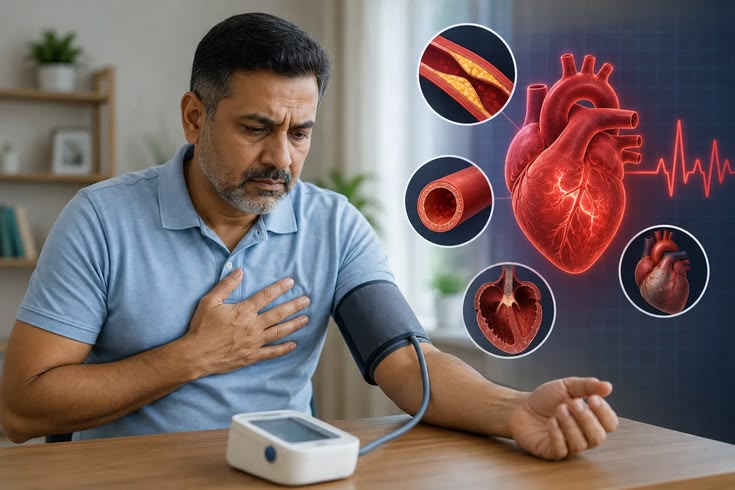
Hypertension Basics: What Every Pune Resident Should Know About High Blood Pressure
High blood pressure, or hypertension, is often called the “silent killer” — and for good reason. Most people who have it feel completely fine. There’s no dramatic warning sign, no obvious symptom. Yet left unchecked, it quietly damages your heart, brain, kidneys, and blood vessels, raising your risk of heart attack, stroke, and kidney failure. At Pune CC Clinic in Baner, we see this pattern often: patients who had no idea their blood pressure was high until it was picked up during a routine check-up, or worse, after a cardiac event. This post covers the basics — what hypertension is, why it matters, and what you can do about it starting today. What Exactly Is Hypertension? Blood pressure is the force your blood exerts against the walls of your arteries as your heart pumps it around the body. It’s measured using two numbers: Systolic pressure (the top number) — pressure when your heart beats Diastolic pressure (the bottom number) — pressure when your heart rests between beats A normal reading is typically around 120/80 mmHg. You’re generally considered to have hypertension when readings consistently measure 140/90 mmHg or higher. Readings between 120-139/80-89 are considered elevated or pre-hypertensive — a signal to act before it progresses. Why Does It Matter So Much? Over time, high blood pressure forces your heart to work harder than it should, and it puts extra strain on your artery walls. This can lead to: Heart disease and heart failure — the heart muscle thickens and weakens from constant overwork Stroke — damaged or blocked blood vessels in the brain Kidney damage — the kidneys’ delicate filtering vessels wear down Vision loss — from damage to the blood vessels in the eyes Arterial damage — increasing risk of aneurysms and artery hardening The tricky part is that this damage happens gradually and silently, often over years, which is exactly why regular monitoring matters even when you feel healthy. Who’s at Risk? Hypertension doesn’t discriminate, but certain factors increase your risk significantly: Age — risk increases as you get older Family history — genetics play a real role Weight — excess weight makes your heart work harder Diet — high salt intake is a major contributor, and Indian diets are often salt-heavy Sedentary lifestyle — lack of physical activity Stress — chronic stress, common in busy urban life, can contribute to sustained high readings Smoking and alcohol use Diabetes and other metabolic conditions If you’re in Pune and juggling long commutes, desk jobs, and the fast pace of city life, several of these risk factors may apply more than you’d think — which is why routine screening is worth prioritizing, not postponing. Common Symptoms (When They Do Appear) Most people with hypertension have no symptoms at all, which is precisely the danger. In more severe or long-standing cases, some people notice: Headaches Shortness of breath Nosebleeds Dizziness or lightheadedness Chest discomfort Because these symptoms are vague and often show up only when pressure is already very high, relying on symptoms alone is not a safe strategy. A simple blood pressure check is the only reliable way to know where you stand. Managing and Preventing Hypertension The encouraging part: hypertension is very manageable, especially when caught early. Common approaches include: Reduce salt intake — be mindful of pickles, papads, and processed foods common in Indian cooking Stay active — even 30 minutes of brisk walking most days makes a measurable difference Maintain a healthy weight Limit alcohol and avoid smoking Manage stress through better sleep, breathing exercises, or simply slowing down Monitor regularly — a home BP monitor is a worthwhile investment if you’re at risk Take prescribed medication consistently, if recommended by your doctor — skipping doses is one of the most common reasons treatment fails When Should You See a Cardiologist? You don’t need to wait for symptoms. Consider getting checked if: You’re over 30 and haven’t had your blood pressure checked in the last year You have a family history of hypertension, heart disease, or stroke You’ve noticed occasional headaches, breathlessness on exertion, or unexplained fatigue You have diabetes, high cholesterol, or are significantly overweight You’re already on blood pressure medication and want your treatment reviewed Get Checked at Pune CC Clinic, Baner At Pune CC Clinic, Dr. Mangesh B. Danej (MBBS, MD Internal Medicine, DNB Cardiology) offers thorough hypertension evaluation, ECG, 2D-Echo, and ambulatory BP monitoring to get a complete picture of your heart health — not just a single reading in a doctor’s office. Whether you’re in Baner, Balewadi, or anywhere across Pune, a simple check-up today could prevent a serious complication years down the line. 📍 Visit us: 5th Floor, Shivom Regency, Baner Road, Baner, Pune, Maharashtra 411045 📞 Call: +91-7385626202 🗓️ Book an Appointment