
A treadmill stress test is a cardiac test used to understand how the heart responds when the body is physically active. While a resting ECG records the heart when a person is relaxed, a treadmill stress test observes heart rate, rhythm, blood pressure, ECG changes, and symptoms during exercise. A Cardiologist in Balewadi may consider this test when symptoms or other findings suggest that more information about the heart’s response to exercise is needed.
What Is a Treadmill Stress Test?
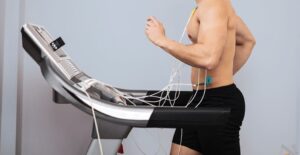
A treadmill stress test, also called an exercise stress test or TMT, involves walking on a treadmill while the heart is continuously monitored. The speed and incline of the treadmill are gradually increased according to a standard protocol.
Electrodes placed on the chest record the heart’s electrical activity. Blood pressure and heart rate are also monitored throughout the test. The healthcare team observes how the heart responds as the level of exercise increases.
The test may be stopped when the planned exercise level is reached, when symptoms develop, when certain ECG or blood pressure changes occur, or when the person becomes too tired to continue.
Why Is a Treadmill Stress Test Done?
The main purpose of a treadmill stress test is to assess the heart under physical stress. Several factors can lead to a doctor recommending the test.
1. To Evaluate Chest Pain
Chest discomfort that occurs during physical activity can sometimes be associated with reduced blood flow to the heart. A stress test may help determine whether exercise brings on symptoms or ECG changes that require further evaluation.
However, chest pain has many possible causes, so a treadmill test is interpreted along with the person’s medical history and other findings.
2. To Assess Possible Coronary Artery Disease
During exercise, the heart needs more oxygen-rich blood. If blood flow through the coronary arteries is limited, certain changes may appear during exercise.
A treadmill stress test can therefore help assess the possibility of exercise-induced myocardial ischemia in appropriately selected patients. It does not directly produce images of the coronary arteries or show the exact location of a blockage.
3. To Investigate Breathlessness During Exercise
Some people experience shortness of breath when walking quickly, climbing stairs, or exercising. A stress test can show how the heart responds as physical activity increases and whether symptoms occur alongside changes in heart rate, blood pressure, or ECG findings.
Breathlessness can also have lung, blood, metabolic, or other causes, so additional assessment may be needed.
4. To Measure Exercise Capacity
A treadmill stress test can help determine how much physical activity a person can tolerate.
The test may record factors such as:
- Exercise duration
- Maximum heart rate achieved
- Blood pressure response
- ECG changes
- Symptoms during exercise
- Estimated exercise capacity
These findings can be useful when assessing overall cardiovascular function.
5. To Evaluate Abnormal ECG Findings
Sometimes a resting ECG shows changes that need additional assessment. In selected situations, an exercise stress test may help determine how the heart behaves when its workload increases.
The decision to perform the test depends on the person’s symptoms, age, cardiovascular risk factors, ECG findings, and other clinical information.
6. To Assess Exercise-Related Heart Rhythm Problems
Some abnormal heart rhythms may become more noticeable during physical activity. Continuous ECG monitoring during a treadmill test can help identify certain exercise-associated rhythm changes.
If an irregular rhythm is suspected but does not occur during the test, other forms of heart rhythm monitoring may be considered.
7. To Assess Functional Capacity in Known Heart Disease
For some people who already have cardiovascular disease, exercise testing can help assess functional capacity or the response to treatment.
The timing and purpose of testing vary according to the specific heart condition and the individual’s clinical situation.
What Happens During a Treadmill Stress Test?
Before starting, the healthcare professional usually records resting heart rate and blood pressure. ECG electrodes are attached to the chest so the heart’s electrical activity can be monitored.
The person then begins walking on the treadmill at a comfortable pace. The treadmill speed and incline gradually increase.
During the test, the healthcare team monitors:
- Heart rate
- Heart rhythm
- ECG pattern
- Blood pressure
- Chest discomfort
- Breathlessness
- Dizziness or unusual fatigue
- Exercise tolerance
The person should report symptoms as soon as they occur. The test can be stopped if symptoms or monitored changes indicate that continuing is not appropriate.
How Should You Prepare for a Treadmill Stress Test?
Preparation can vary depending on the reason for the test and the healthcare facility’s instructions. Generally, patients may be advised to:
- Wear comfortable clothing and suitable walking shoes.
- Avoid a heavy meal shortly before the test.
- Follow instructions regarding caffeine or tobacco use.
- Tell the healthcare team about all medicines being taken.
- Ask whether any medication needs to be adjusted before the test.
Do not stop heart or blood pressure medicines on your own. Some medicines can affect the heart rate and the interpretation of the test, so any medication changes should be made only according to specific medical instructions.
How Long Does a Treadmill Stress Test Take?
The exercise portion of a treadmill stress test may last several minutes, although the complete appointment can take longer because of preparation and recovery monitoring.
The test is not necessarily continued until a person reaches a predetermined maximum. It may be stopped earlier if symptoms occur, the person becomes too tired, or the monitoring findings indicate that exercise should end.
What Does a Treadmill Stress Test Show?
The test gives information about how the cardiovascular system responds to increasing physical workload.
Doctors may look at:
Heart rate response: Whether the heart rate increases appropriately with exercise.
Blood pressure response: How blood pressure changes as exercise intensity increases.
ECG changes: Certain exercise-related electrical changes may suggest reduced blood flow or other cardiac abnormalities.
Symptoms: Chest discomfort, breathlessness, dizziness, fatigue, or other symptoms are considered alongside the monitoring results.
Exercise capacity: The duration and workload achieved can give information about functional capacity.
Does an Abnormal TMT Mean There Is a Heart Blockage?
Not necessarily.
An abnormal treadmill stress test can indicate that further evaluation may be appropriate, but it does not by itself confirm a coronary artery blockage. False-positive and false-negative results can occur, and the accuracy of the test depends on the person’s clinical situation.
Depending on the findings and risk profile, additional evaluation may include an echocardiogram, stress imaging, CT coronary angiography, or other cardiac investigations.
The choice depends on the symptoms, medical history, examination findings, and the results of the initial assessment.
Is a Treadmill Stress Test Safe?
For most appropriately selected patients, exercise stress testing is generally considered safe when performed with appropriate monitoring. Because exercise places additional demand on the heart, trained healthcare professionals monitor the patient throughout the test.
People with certain medical conditions may need a different form of cardiac evaluation or may need specific assessment before exercise testing.
The test should be performed in a setting where appropriate medical monitoring and emergency support are available.
Treadmill Stress Test vs Resting ECG
| Feature | Resting ECG | Treadmill Stress Test |
| Activity level | Resting | During exercise |
| Heart rate | Resting measurement | Monitored as exercise increases |
| ECG | Recorded at rest | Continuously monitored during exercise |
| Blood pressure | Usually measured at rest | Monitored during exercise |
| Exercise capacity | Not assessed | Can be assessed |
| Symptoms | May be absent | Exercise-related symptoms can be evaluated |
Both tests have different purposes and may be used together depending on the clinical situation.
When Should Chest Pain Be Treated as an Emergency?
A treadmill stress test is generally a planned diagnostic test, not a test to arrange when someone is experiencing severe or potentially dangerous chest pain.
Seek emergency medical care immediately if chest pain is severe, persistent, or accompanied by symptoms such as:
- Severe shortness of breath
- Fainting or near-fainting
- Cold sweating
- Nausea or vomiting
- Sudden extreme weakness
- Pain spreading to the arm, shoulder, back, neck, or jaw
These symptoms can occur with a heart attack or other serious conditions and require urgent assessment.
Frequently Asked Questions
Is a treadmill stress test painful?
The test itself is not usually painful. However, exercise can cause temporary tiredness, breathlessness, sweating, or muscle fatigue. Any chest discomfort or unusual symptoms should be reported immediately.
Can a treadmill test detect blocked arteries?
It cannot directly visualize coronary artery blockages. It may show exercise-related findings that suggest reduced blood flow to the heart and may indicate the need for additional testing.
Is TMT the same as an ECG?
No. A resting ECG records the heart’s electrical activity while the person is generally at rest. A TMT records ECG changes while the heart is working harder during exercise.
Can everyone undergo a treadmill stress test?
No. Suitability depends on the person’s symptoms, medical history, physical ability, cardiovascular condition, and other factors. The appropriate type of stress test varies from person to person.
What happens after an abnormal treadmill test?
An abnormal result does not automatically mean that a serious heart condition is present. The findings are interpreted together with symptoms and risk factors. Additional tests may be recommended when clinically appropriate.
Final Thoughts
A treadmill stress test is useful for understanding how the heart responds to physical activity. It can help evaluate exercise-related symptoms, assess exercise capacity, identify certain ECG changes, and contribute to the assessment of possible coronary artery disease in selected patients. A Cardiologist in Balewadi may recommend a TMT when the information from exercise testing can add to the clinical assessment. The result should always be interpreted in the context of the person’s symptoms, medical history, examination, and other investigations.